
Questions
Latest
Videos
Video # 9: This is Vita and her horse PJ at a hunter schooling show!
Lesley's Corner
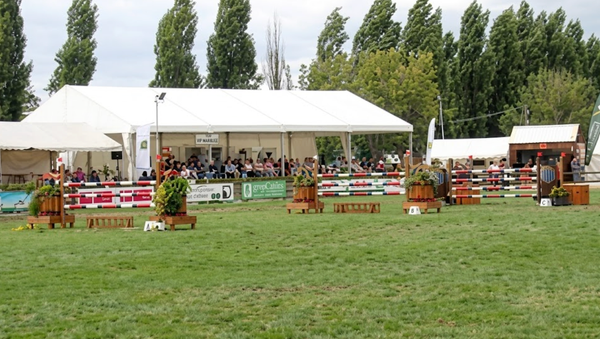
Successfully Negotiating Double and Triple Combinations
The key to success at double & triple combinations is for the rider to have a clear plan! You must know precisely what the distance is between the elements, & also what your horse's natural stride length is. Then you have to be able to analyze the combination to make a game plan. Learn how here!
~Lisa's Corner~
Lisa's Blog post # 32
“I thought I had fixed that!” Today Lesley put Cotton and me to work on our canter – the last obstacle to overcome before we’re ready to do stadium courses (I hope). Right away she got on to me about my posture! I thought I was lifting my chest. I
Educational Discussions
Video Discussion # 5: What caused this runout and the resultant fall?
Questions
Question # 34: Every time I go over a jump I end up being left behind and pulled forward. I love to canter over jumps but with the horse I ride now he canters calmly up to the jump then bolts after it. He also spooks a lot. Can you help? (Cece)
Lesley's Corner
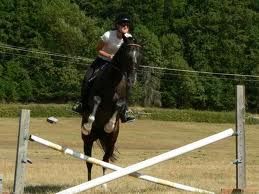
Correcting the Horse that Drifts When Jumping
Questions
Question # 33: Show nerves! So...I've recognized for some time that show nerves (mine!) are the current single biggest obstacle to our success.
Questions
Question # 32: When is the best "moment in time" to use a half-halt to help rebalance a horse at the canter and trot?
Questions
Question # 31: Could you explain the use of the rider's weight in the seat affecting a horse's balance?
~Lisa's Corner~
Lisa's Blog post # 31
Update – Cotton needed two injections last week and has had the past 5 days off so I haven’t had anything to write about! Today I worked him for just a little while since it was his first day back. We had 2 days of stadium work right before his
Lesley's Corner
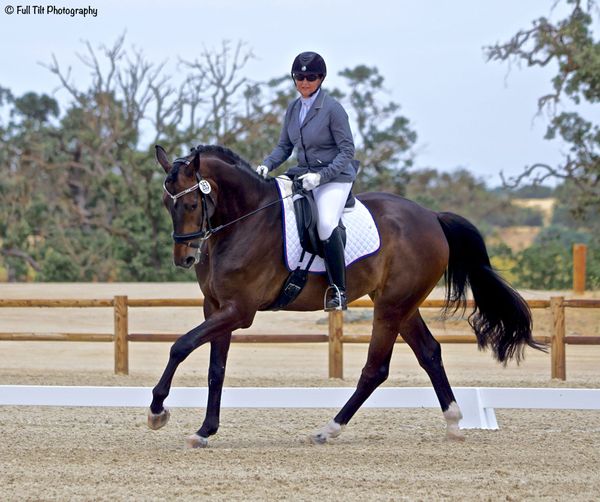
Improving Canter Departs
The quality of the canter depart, along with the balance and engagement of the canter in general, can be greatly improved by increasing the engagement of the outside hind leg. Here is an exercise that will utilize that concept to improve your canter departs!