Get your FREE daily tip here!
Tip/Quote of the Day # 77
On straight lines, the principle of inside leg to outside rein still applies - particularly in canter, to keep the horse truly straight.

Get your FREE daily tip here!
On straight lines, the principle of inside leg to outside rein still applies - particularly in canter, to keep the horse truly straight.
Get your FREE daily tip here!
The canter is often the most valuable warm up gait, as it can be more effective than the the trot in loosening the horse up and encouraging him to move fully through the back.
The Fringe Eventer!
PRE SEASON TRAINING CAMP Well, here we sit 6 days out from our official debut into the eventing world and I find myself praying that our pre season is not a portend of things to come. Riding between thunder boomers has become the norm here in rainy Florida. If it
Get your FREE daily tip here!
Focus on the horse's hind legs in upward transitions. Look for the feeling that your horse begins to step into the new gait with their hind feet first.
Get your FREE daily tip here!
Always keep bend in your knees and elbows. If either become straight at any time, that limb will become rigid, and unable to follow the horses movement.
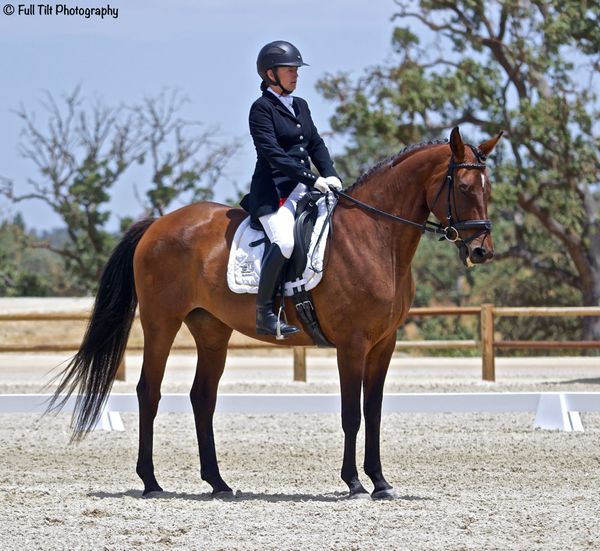
Lesley's Corner
The rein back is such a valuable exercise... It reinforces the rider's restraining aids as necessary, and engages the horse's hind legs - increasing the "sit" behind. Like any exercise, however, it must be done correctly to be beneficial. Learn how to do it here!
Get your FREE daily tip here!
When seated, you must be sitting in the lowest part of the saddle. It is common for riders to mistakenly sit too far back in the saddle, where the seat of the saddle is rising towards the back - especially when riding in Dressage saddles. This renders your seat ineffective, and
Educational Discussions
Get your FREE daily tip here!
It is a good idea to alternate harder days and easier days in your training schedule. That way you give the horse a chance to physically recover from each day of hard work, and lessen the chances of injury.
Get your FREE daily tip here!
While a thicker mouthpiece is generally considered to be more gentle than a thinner bit, the horse with a small mouth or a low palate often prefers a thinner bit.
Get your FREE daily tip here!
Only the horse with a supple, relaxed back can have true impulsion.
Questions